
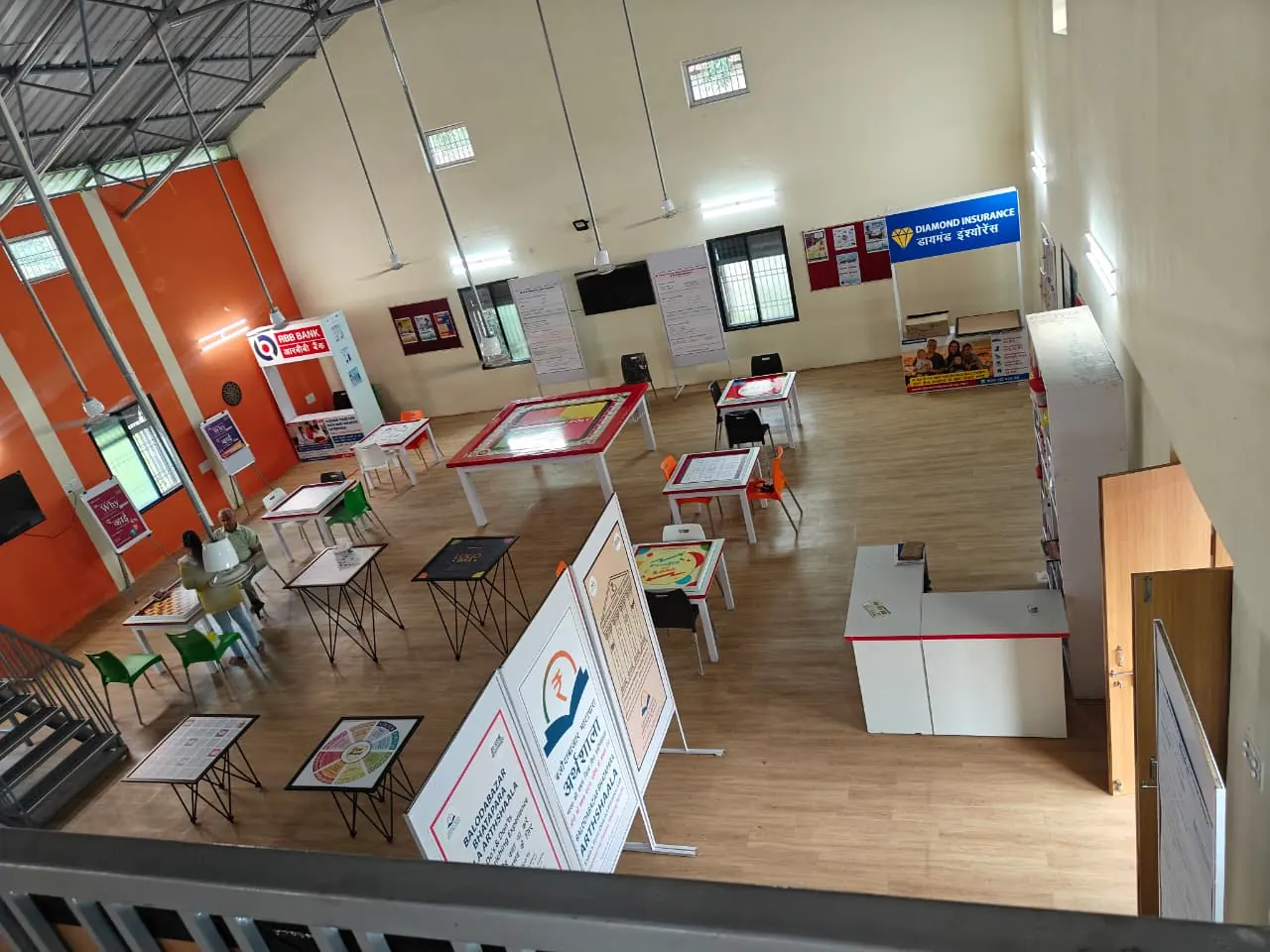
A Finance Lab moves financial learning from explanation to participation, helping learners understand choices, consequences and real-life applications.
The distinction is participation
A Finance Lab is a structured environment where learners engage with realistic financial and commerce situations rather than only hearing about them. Concepts such as saving, digital payments, risk, consumer rights and entrepreneurship become opportunities to consider options, discuss trade-offs and understand consequences. The lab is not simply a decorated classroom or an exhibition of financial terminology. Its distinctive value is what learners do there.
Financial knowledge is not the same as financial capability
A learner may be able to define a budget and still struggle to prioritise needs over wants. They may recognise the phrase digital fraud yet overlook a suspicious request for an OTP. Knowledge remains necessary, but everyday financial life asks people to notice, decide and act. Experiential education creates a bridge between subject knowledge and applied judgement.
What a meaningful session looks like
A strong session begins with a situation that requires attention. Learners may compare alternatives, make a decision, consider an outcome and explain their reasoning. A facilitator helps connect that experience with the underlying concept and encourages a second look: What would change if the circumstances were different? The method matters more than theatrical props or activity for its own sake.
A programme, not a one-day event
Effective Finance Labs work as part of a learning programme. Sessions should have clear outcomes and progression across age groups and subject domains. Teacher orientation, scheduling, usage monitoring and periodic review help turn an impressive installation into an environment that learners actually use. The model can be adapted for a private school, a network of government schools or a shared district-level facility.
What institutions should ask
Before selecting a Finance Lab programme, ask what learners will be able to understand or do differently, how activities connect with curriculum and life skills, who will facilitate them, how often the lab will be used, and how learning progress will be observed. The strongest laboratory is not the one with the most equipment. It is the one that creates the most thoughtful participation.
Explore the approach in practice. See how CforCommerce brings financial learning to schools and district programmes.
Explore the experience ↗Request a presentation ↗